A failed carton needs a diagnosis before it gets another strip of tape. You will learn how to identify the failure, repair the box safely, apply tape without creating a second weak point, and decide when the carton itself needs replacing.
Key takeaways
- Inspect the failure line before adding tape; tears and lifting edges reveal the cause.
- Remove dust, oil, and loose fibres before applying a replacement strip.
- Centre tape over the seam and press it firmly onto both flaps.
- Use thicker tape or reinforcement when carton weight exceeds the original seal’s capacity.
Identify Why the Carton Seal Failed Before Adding Tape
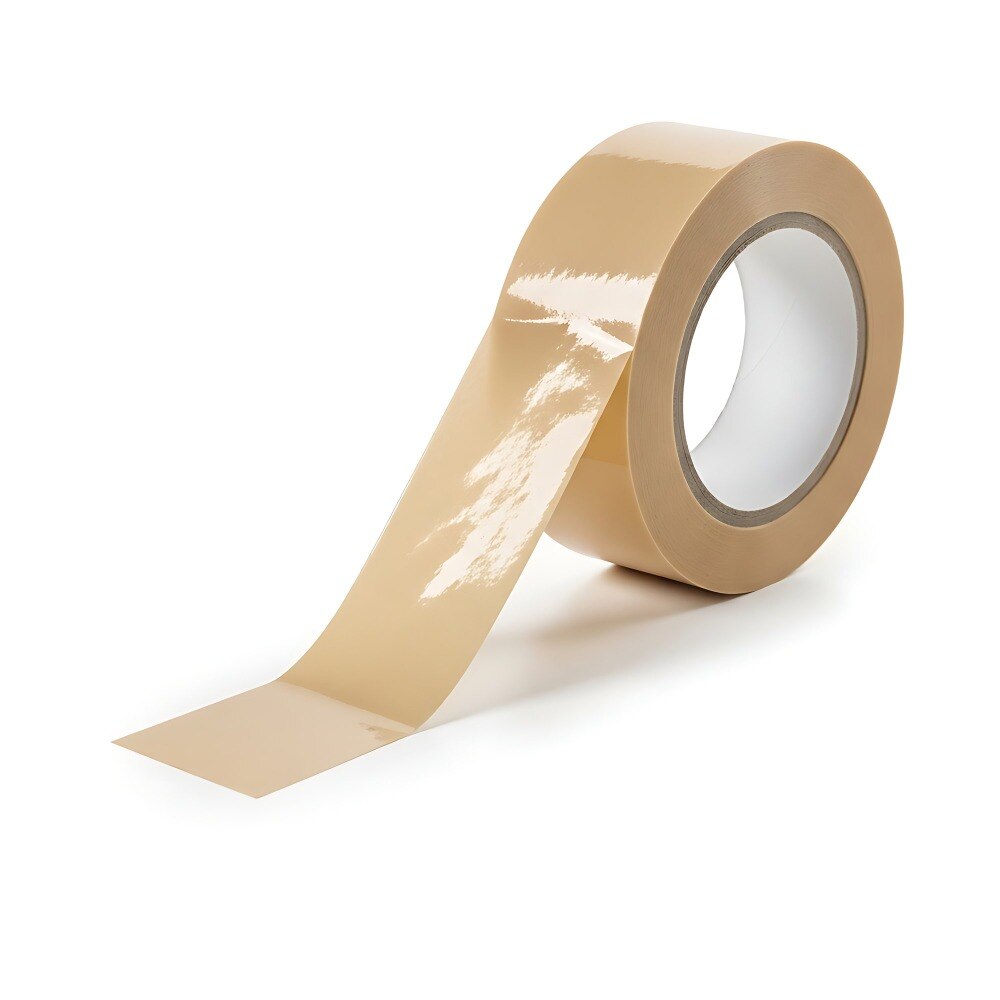
A seal that opens does not automatically mean the brown BOPP tape is defective. Press the flaps closed and inspect the failure line before applying another strip; the tear pattern usually identifies the cause.
- Adhesive failure leaves the tape intact but detached from the board. Dust, loose fibres, oil, wax, varnish, or moisture can prevent wet-out. Tape splitting, stretching, or a longitudinal tear points to inadequate tape construction or damage.
- Board failure leaves fibres, coating, or chunks of corrugate stuck to the adhesive. Crushed edges, weak flute areas, and repeated tearing at one location indicate damaged or low-strength carton board.
- Flap failure appears as spring-back, corner lift, misalignment, or a gap under the seam. Check whether the flaps meet squarely and whether the applicator pressed the tape firmly across the top and down both sidewalls.
- Moisture-softened board feels flexible, swollen, or wavy. Record carton temperature, tape temperature, relative humidity, and time from forming to sealing; compare results across hot-season and monsoon shifts.
- Excessive load causes bulging, flap opening, or continuous force against the seam. Check fill height, compression, carton grade, and closure geometry before choosing wider or stronger tape.
Brush off loose fibres and let damp board dry; do not wash corrugated board with water. Store rolls in original packaging away from sunlight, heat, moisture, dust, solvents, and chemicals. These checks turn carton sealing problems in vadodara into a traceable process issue rather than a roll-price comparison.
Repair a Failing Carton Step by Step
Do not lay fresh tape over a loose, dusty, wet, or lifted strip. For a brown bopp tape carton for failures in vadodara, remove the failed seal and repair the board before applying a new closure.
1. Move the contents to a sound carton if the box carries hazardous, heavy, or high-value goods. Tape alone is not a safe repair for crushed corners, split panels, or a carton that has lost its load-bearing shape.
2. Cut through the old tape along the seam and peel away every loose section. Scrape off loose fibres and contaminated board without tearing sound paper; never trap dust or adhesive flakes beneath the replacement strip.
3. Let wet or condensation-softened board dry completely. Reject it if the flutes have collapsed, the panel remains soft, or the carton cannot hold a square shape.
4. Re-square the carton by aligning the flaps and corners, then compress the flaps together. Replace a crushed panel with matching corrugated board, or transfer the goods into a new carton when the damage reaches a corner, edge, or bottom panel.
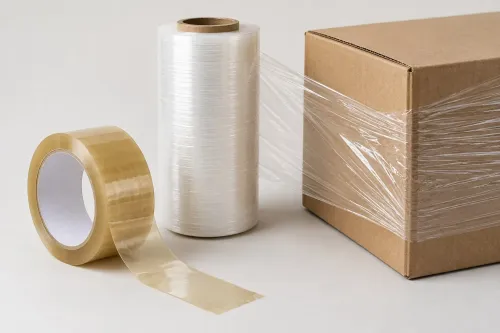
5. Apply a compatible brown BOPP strip to clean, dry, sound board. Centre it over the seam, press from the middle outward, and run it down both sidewalls, leaving about 75 mm beyond each end. Add a second strip across the centre or use an H-seam only after the carton is properly aligned.
Press the repair firmly with an applicator or clean roller, then check for edge lift, wrinkles, and gaps. Hold the carton briefly before loading it; if the seam opens under hand pressure, re-pack rather than adding endless tape.
Apply Brown BOPP Tape Without Creating a Weak Seal
A reliable repair starts on sound board, not on the failed strip. Remove loose tape, dust, lifted fibres, and any wet or oily material; let the carton dry fully, then re-square the flaps and replace crushed board before sealing.
- Centre the tape directly over the flap seam. Use a hand applicator with a clean pressure roller, keep the roll aligned, and press from the carton centre towards each end to remove air pockets and wrinkles.
- Press the tape firmly across the top panel, then down both sidewalls. Do not stretch the film; tension can pull the tape away as the carton settles.
- Leave the recommended end overlap shown below. If an end lifts, add a cross-strip over the first strip rather than placing new tape on loose adhesive.
- For a heavy or repaired carton, reinforce the centre seam with a second parallel strip. Use an H-seam when the bottom or top needs closure across both end flaps, and add short corner strips where edges lift.
| Width | End overlap | Use |
|---|---|---|
| 48 mm | 50–75 mm on each end | Standard dry-board seam |
| 60 mm | 75 mm or more | Damaged edges or wider flap gaps |
| 72 mm | 75–100 mm | Broad repairs and high-contact seams |
A wider strip does not cure dirty board or weak adhesive. When comparing brown bopp tape in vadodara, request the adhesive type and technical data sheet; BOPP identifies the film backing, not the adhesive. Qualify the chosen tape on your carton, applicator pressure, and storage conditions.
Match Tape Thickness and Reinforcement to the Carton Load
Choose tape thickness by carton stress, not by roll price: a light, well-filled carton needs less reinforcement than a bulging carton with flap spring-back.
| Thickness | Suitable starting point | Upgrade or reject condition |
|---|---|---|
| 36 micron | Light contents, short handling, smooth uncoated board, firmly aligned flaps | Use thicker tape if the seam opens during loading or storage |
| 40 micron | Light-to-moderate cartons with stable loads and clean application | Upgrade when vibration, stacking, or rough handling causes edge lift |
| 45 micron | General-purpose cartons with moderate contents and normal transport | Check the carton design before moving higher if flaps remain under tension |
| 48 micron | Heavier moderate loads, longer storage, or slightly rougher handling | Add seam or corner reinforcement when failure begins at ends or corners |
| 55 micron | High handling demand on a sound carton with properly closed flaps | Do not use it to rescue crushed board, overfill, or moisture-softened panels |
Use 60 mm tape when a standard-width strip leaves little margin over a wide seam, uneven flaps, or a repair area. Choose 72 mm when the seam is broad, the board is rough, or load movement repeatedly lifts the edges. Wider tape cannot compensate for a carton that is structurally overfilled.
Apply an H-seam when both top flap joints and the centre seam need restraint. Add corner strips when corner lift or sidewall separation starts the failure. Replace the carton when board fibres are crushed, flaps no longer align, or the contents force continuous opening pressure.
Qualify the choice on actual cartons from several rolls and shifts. Inspect the bond immediately, check peeling after adhesive dwell, and test a loaded carton for edge opening.
Verify the Repair Across Vadodara’s Heat, Humidity, and Handling Conditions
Approve the repair only after it survives the conditions that caused the failure. Use the actual board, flap geometry, coating, applicator, tape width, and production speed. If the adhesive releases cleanly, investigate tape or application; if fibres tear from the board, flaps spring back, or corners crush, the carton design or load is the failure.
Qualify a bopp tape supplier in vadodara by requesting the adhesive chemistry, tape thickness, lot number, technical data sheet, and declared test methods. ASTM D5486/D5486M supports packaging-tape specification, while ASTM D3330 and ASTM D3654 address peel adhesion and holding power.
Greenline Industries is one supplier to compare on those measurable details, not on roll price alone.
| Check | Record | Reject the repair when |
|---|---|---|
| Hot season | Carton and tape temperature, relative humidity, seal dwell | Edges lift or adhesive softens |
| Monsoon exposure | Wet-board condition, condensation, humidity, exposure time | Board fibres separate or the seam opens |
| Storage | Original packaging, conditioning time, stacked-carton load | Seals creep, flatten, or split |
| Shift comparison | Operator, applicator pressure, line speed, failure count | Failures cluster on one shift |
| Transport simulation | Compression, vibration, drops, and filled-carton weight | Flaps open or corners tear |
Condition rolls in their packaging before testing; moving cold rolls straight into humid production can create condensation. Compare sealed cartons after 24 hours, then after stacked storage and transport simulation. Record every failure mode, including tape split, corner lift, cardboard tear-out, and flap spring-back.
Related product
 | BOPP TAPE Details Size:-12mm, 18mm, 24mm, 36mm, 48mm, 60mm, 72mm Length:- Available in 25-200 Meter Thickness:-36-55 Micron Color:-Transparent, Brown and... View product → |
Frequently asked questions
Why did the carton seal fail before the tape was added?
Inspect the failure line for dusty or oily board, crushed flaps, poor tape contact, an off-centre strip, or a load that exceeded the carton’s strength.
How do you repair a carton with brown BOPP tape?
Empty or reduce the load, close the flaps, remove loose fibres and contamination, centre a fresh strip over the seam, and press it firmly along both sides.
How should brown BOPP tape be applied for a strong carton seal?
Apply the tape to clean, dry board with even overlap on both flaps. Keep the strip straight and press the full length to remove air gaps.
How do you choose tape thickness and reinforcement for a carton load?
Match tape thickness and reinforcement to carton weight, flap tension, stacking pressure, and handling. Use extra strips or stronger reinforcement when one centre seam cannot hold the load.
How can you verify a repaired carton in Vadodara conditions?
Check the seal after exposure to local heat, humidity, storage, and handling. Reject the repair if edges lift, the tape stretches, or the flaps reopen.
Keywords