A printed BOPP roll is defined by more than width, thickness and artwork: the film structure, print position, repeat length, core, winding and machine tolerances determine whether it runs reliably. By the end, you will have a specification checklist for comparing printed BOPP printing options, approving samples and evaluating a printed BOPP supplier in Vadodara.
Key takeaways
- Confirm roll width, length, core diameter and winding direction before machine trials.
- Choose surface or reverse printing based on lamination, handling and artwork protection.
- Approve a physical print proof, colour reference and repeat length before production.
- Check incoming rolls for telescoping, edge damage, splice marks and print defects.
What a Printed BOPP Roll Includes Beyond the Printed Logo
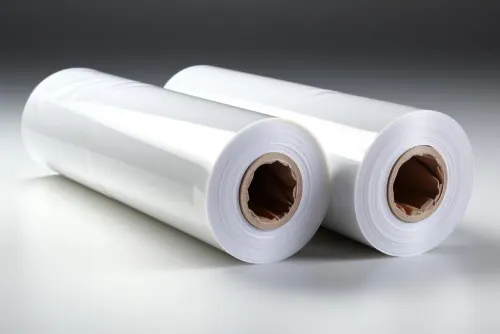
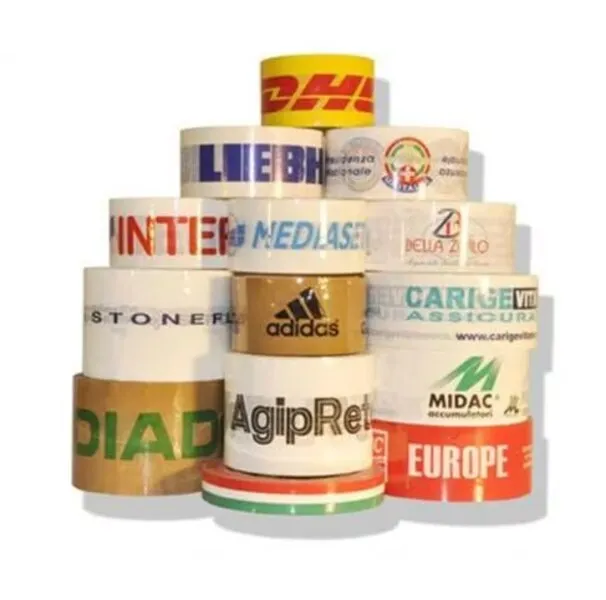
A printed BOPP roll is a production web, not simply clear film with a logo added. Surface printing puts ink on the outside; reverse printing places it on the inner face of transparent BOPP, protecting the artwork after lamination.
A laminated structure bonds printed BOPP to another film, while coextruded film combines layers during film manufacture.
Printed BOPP printing options differ sharply by run and artwork:
| Option | Strength | Trade-off |
|---|---|---|
| Flexographic | Lower plate-related setup cost; suitable for moderate runs | Fine detail and colour consistency depend on plates, inks and press control |
| Rotogravure | Excellent fine detail, solid coverage and repeat-to-repeat colour consistency | Cylinder costs favour long runs |
| Digital | No plates or cylinders; economical for short runs and variable artwork | Colour gamut, speed, adhesion and maximum web width can limit the result |
Ask for these printed BOPP roll specifications before approving a quotation:
- Film type: plain, coextruded or metallized; also state whether the roll is for lamination, pouch conversion or form-fill-seal.
- Ink chemistry, corona-treatment level, print repeat, maximum colour count and print area, including any defined central area.
- Splice limit, splice construction and winding direction.
- For sealing, specify the sealant layer, seal initiation temperature, hot tack and seal strength.
Standard BOPP is not automatically heat-sealable. Specify the intended sealant side and test conditions; otherwise a pouch or form-fill-seal machine can produce weak seals, even with accurate printing.
Which Printed BOPP Roll Specifications Control Machine Fit
A roll can fit a pallet and vehicle yet fail on the unwinder: the core may not mount, the outside diameter may exceed the stand, or eccentric winding may create tracking and tension errors. For printed BOPP roll specifications, give the converter machine limits, not just film width and micron value.
- Specify web width and tolerance; nominal thickness in microns and gauge tolerance; net length or maximum outside diameter; core inside diameter, core material and core length; maximum gross roll weight; roll hardness; allowable eccentricity; static and kinetic coefficient of friction; web curl; blocking; telescoping; winding uniformity; splice construction and splice limit.
- State roll orientation, winding direction, pallet arrangement, and the converter’s required print repeat, cutting marks and registration marks. Include form-fill-seal, lamination or pouch use in the order.
- Require test method and conditions for thickness, tensile strength, elongation, haze, COF, oxygen transmission and water-vapour transmission: ASTM D882, D1003, D1894, D3985 and F1249 where applicable, plus specimen conditioning, temperature, humidity and gas or relative-humidity conditions.
| Nominal dimension | Usable dimension | Why it matters |
|---|---|---|
| Width or thickness on the quotation | Actual tolerance across the running web | A nominally correct roll can jam guides or alter sealing |
| Listed length or maximum OD | Length remaining after trims and diameter within unwinder limits | A pallet-ready roll can still overload the stand |
A request for printed BOPP roll details in Vadodara should therefore include the machine’s real clearance, shaft and tension limits, not merely transport dimensions.
How to Prepare Artwork and Approve Print Quality
Give the quotation artwork in production terms, not as a logo file alone. State repeat length, bleed, safe margins, logo dimensions, minimum line thickness, barcode orientation, registration marks, and any cylinder, plate or digital-file requirements. Add an approved Pantone value or physical drawdown; screen colours are not print standards.
| Print option | What it changes | Approval point |
|---|---|---|
| Full-width print | Covers the available web width | Confirm edge clearance and winding |
| Defined central area | Keeps artwork inside a fixed band | Match the bag maker’s front panel |
| Surface print | Ink remains exposed to handling | Specify varnish or protective laminate |
| Reverse print | Ink sits inside transparent BOPP | Check viewing side and adhesive compatibility |
| Opaque white underprint | Increases colour density and contrast | Confirm whether white is selective or full-area |
| Gloss or matte varnish | Changes sheen and rub protection | Approve appearance under production lighting |
Approve a physical press proof or production sample, not a PDF alone. The sample must use the intended film, ink system, print repeat and finish; a visually correct PDF cannot reveal registration drift or reverse-print orientation.
Inspect the finished roll by checking barcode readability with the intended scanner, small-text legibility under normal viewing distance, logo alignment against cutting marks, colour consistency against the drawdown, missing repeats, print offset, ink rub after handling, and reverse-print orientation from the viewing side.
Record the result against the approved printed BOPP printing options and the complete printed BOPP roll details in Vadodara.
How Film, Adhesive and Application Conditions Affect the Result
Choose micron thickness for the job, not because a higher number sounds stronger. A thicker BOPP film improves tear resistance and stiffness but consumes more material, costs more, and conforms less well around irregular cartons. It does not automatically improve sealing; adhesive choice and application pressure control the bond.
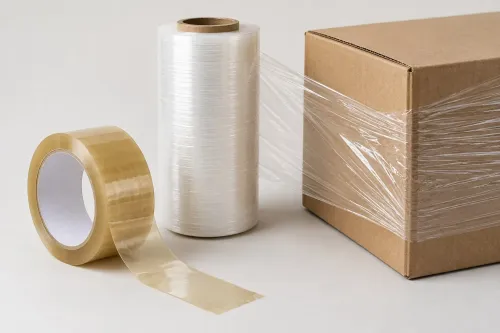
For carton-sealing tape, ask for:
- Adhesive chemistry, tack, peel strength and holding power
- Performance data on virgin corrugated board, recycled board, dusty surfaces and cold cartons
- Suitability for hand application or a carton-sealing machine
Apply tape to clean, dry cartons with firm pressure, use enough overlap to cover the joint, and avoid stretching hand-applied tape. Dust weakens contact; high humidity can slow adhesion and soften board. Machines need the correct roll width, tension, brake setting and application speed.
Confirm these alongside the printed BOPP roll specifications and printed BOPP printing options.
| Option | Advantage | Poor fit |
|---|---|---|
| Printed BOPP | Branded sealing and tamper visibility | Tiny batches, frequent artwork changes or variable information |
| Plain tape plus label | Flexible information and low setup | Labels add labour and can peel |
| Pre-printed cartons | Strong graphics on the pack | Artwork changes make stock obsolete |
| Paper tape | Printable, recyclable handling feel | Wet, dusty or high-strength applications |
| Printed stretch film | Large-area identification on pallets | High-contrast regulatory text or true tamper evidence |
None suits variable data without a separate label or printer. Use dedicated labels for serial numbers, changing compliance text and high-contrast regulatory statements. Consider a laminate or tamper-evident construction when opening must be obvious.
How to Compare a Vadodara Supplier, Cost and Incoming Rolls
A printed bopp supplier in vadodara should provide a written quotation, not only a tape sample. Printed bopp roll details in vadodara must state MOQ, roll length, core, width, thickness, print repeat, splice limit and delivery to your industrial area.
- Confirm cylinder or plate charges, digital setup fees, physical proof approval, production sampling, lead time, repeat-order colour matching and artwork-change cost.
- Require GST invoice details, batch number, manufacturing date, adhesive and ink identification, batch traceability and rejection-replacement terms.
Calculate cost per sealed carton from every cost that reaches the carton:
| Cost item | Calculation |
|---|---|
| Tape consumption | Metres used per carton × roll cost per metre |
| Roll price | Total roll price ÷ usable metres |
| Setup charges | Cylinder, plate or digital fees ÷ expected carton quantity |
| Rejected rolls | Rejected-roll value ÷ accepted cartons |
| Changeover effort | Labour and machine downtime ÷ cartons packed |
Add those five results. A cheaper roll loses its advantage if it uses more tape or causes frequent changeovers.
Request food-contact declarations, migration information, residual-solvent or odour data and intended-use limits for the complete structure; BOPP film alone proves nothing. Store rolls away from direct sunlight and heat, and retain shelf-life records. Inspect incoming stock for telescoping, blocked adhesive, uneven winding, damaged cores, width variation and print defects.
Evaluate Greenline Industries on its control of artwork, printing, slitting, adhesive coating and quality checks, not merely its ability to stock printed tape. A capable supplier can show the batch record and approved sample behind each repeat order.
Related products
 | PRINTED BOPP TAPE Details Size:-48mm & 72mm Length:- Customize Thickness:-36-55 Micron Print Color:-Single and Multicolor Shape:- Round Feature:- Moisture,... View product → |
 | BOPP TAPE Details Size:-12mm, 18mm, 24mm, 36mm, 48mm, 60mm, 72mm Length:- Available in 25-200 Meter Thickness:-36-55 Micron Color:-Transparent, Brown and... View product → |
Frequently asked questions
What does a printed BOPP roll include beyond the printed logo?
It includes film construction, ink placement, repeat length, roll dimensions, winding direction, core size and quality controls.
Which printed BOPP roll specifications control machine fit?
Check web width, roll length, film thickness, core diameter, outside diameter, winding direction and splice limits against your machine.
How should you prepare artwork and approve printed BOPP quality?
Supply print-ready artwork with defined colours, dimensions and repeat length, then approve a proof against a physical colour reference.
How do film, adhesive and application conditions affect the result?
Film treatment, adhesive type, surface energy, temperature, humidity and application pressure affect adhesion, clarity and print durability.
How can you compare a printed BOPP supplier in Vadodara?
Compare documented specifications, proofing, batch traceability, delivery consistency, incoming-roll checks and the supplier's response to defects.
Keywords