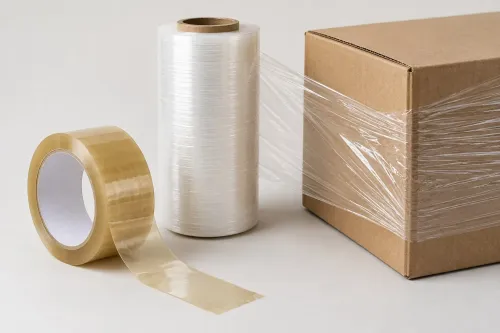
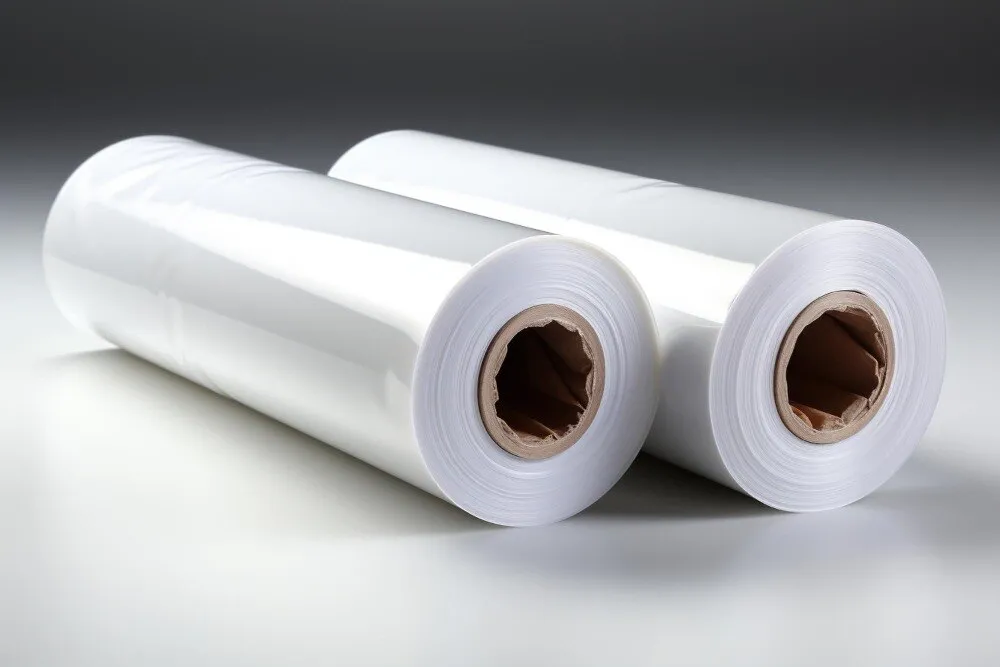
Retail stores need different film formats for backroom bundles, replenishment trolleys, returns and dispatch loads, so choosing by roll price or nominal thickness alone creates waste and breakage. By comparing application method, film construction, dimensions, handling performance and consumption per load, you can select a roll that fits your staff, dispensers and daily workload.
Key takeaways
- Choose hand, pre-stretch or machine film before comparing roll prices.
- Compare micron, width, length and construction against your load requirements.
- Calculate film consumption from wrap count, load size and roll length.
- Approve sample rolls only after testing strength, cling, unwind and storage performance.
Choose the roll format for each retail-store task
Choose the application method before comparing roll price: the right lldpe stretch film roll for retail stores in vadodara depends on whether staff wrap by hand, use a pre stretch dispenser, or run a powered machine.
| Format | Best retail use | What to check |
|---|---|---|
| Hand applied roll | Returns, small cartons, shelf replenishment and occasional backroom bundling | Comfortable roll weight, manageable unwind resistance, suitable core diameter and enough film length for frequent changes |
| Pre stretch hand roll | Repeated shelf replenishment and returns where staff use a compatible dispenser | Confirm the dispenser maintains the film’s designed pre stretch ratio; ordinary dispensers can leave the film loose or cause breaks |
| Machine roll | Store dispatch, consolidation of many cartons and high volume backroom work | Match the machine core, roll width, maximum roll weight, unwind direction and required elongation |
For shelf replenishment, choose a narrow, light hand roll that one employee can control around mixed cartons without crushing corners. Returns work best with a clear hand roll because staff can inspect labels and contents after wrapping.
Use a tougher hand roll for bundles with sharp edges or long movement through the store. A machine roll suits dispatch only when daily volume justifies equipment; otherwise its heavy format increases handling time and waste.
- Ask for net film length and roll weight, not gross weight.
- Trial the roll on actual returns, replenishment bundles and dispatch loads.
- Reject a format that forces repeated roll changes or causes loose wraps.
Compare microns, roll dimensions and film construction
Micron choice sets the starting point, not the complete specification. Use thinner film for light, smooth cartons with short backroom handling; choose thicker film when bundles have sharp corners, heavy contents, long movement routes or repeated trolley handling. A higher gauge cannot compensate for weak puncture resistance or poor cling.
| Option | Key specifications | Best fit |
|---|---|---|
| Hand film, 12–17 microns | 450–500 mm width; standard core; moderate elongation and cling | Individual cartons, returns and shelf-replenishment bundles |
| Reinforced hand film, 17–23 microns | Higher puncture and tear resistance; stronger hold on irregular shapes | Sharp-edged cartons, mixed bundles and loaded trolleys |
| Pre-stretched hand film | Lower unwind force; fixed pre-stretch; lighter net film weight | Frequent staff wrapping where hand fatigue and consistent consumption matter |
| Machine film, 15–23 microns | Machine-compatible core, width, roll diameter and controlled stretch | High-volume dispatch or consolidated retail loads |
Compare usable film width, verified net length, core internal diameter, core length, gross roll mass and maximum outside diameter. A “10 kg roll” is not enough: the figure may include the cardboard core and packaging, while the quoted length may be theoretical.
Film construction changes handling. Cast LLDPE usually offers quiet, smooth unwinding and clear presentation; blown film brings higher toughness and puncture resistance but can unwind noisily. Check cling, elongation, tensile strength and coefficient of friction, using ASTM D5458, ASTM D882 and ASTM D1894 data where supplied.
For stretch film options in Vadodara, trial the same carton sizes, bundle shapes and trolley route. Record breaks, corner punctures, load movement, roll changes and film consumed per load.
Match the wrapping method to the load and calculate consumption
Use hand wrapping for cartons and bundles, pre-stretched film for repetitive trolley work, and machine film only when dispatch volume justifies equipment. The wrong method creates loose tails, corner breaks, neck-down and wasted operator time.
| Load | Recommended method | Wrapping pattern | Record |
|---|---|---|---|
| Carton | Hand-applied film with a dispenser | Two base turns, then one or two turns around the body; add corner protection for sharp edges | Metres per carton and corner breaks |
| Bundle of small packs | Hand film | Compress the bundle with overlapping horizontal turns, then secure the tail | Metres per bundle and bundle movement |
| Stock trolley | Pre-stretched hand film | Wrap the base, make overlapping upward passes, then finish at the top | Metres per trolley and minutes per trolley |
| Pallet or mixed load | Machine or heavy-duty hand film | Anchor the base, wrap upward with consistent overlap, and reinforce unstable layers | Metres per pallet, rejected loads and breaks |
Run a controlled trial using the same carton sizes, pallet pattern, load height, route and staff technique. Weigh or measure each roll before and after use, then include film consumed on rejected loads and film lost during roll changes.
Calculate comparable cost as: roll price × rolls consumed ÷ cartons, bundles, trolleys or pallets completed. A lldpe stretch film roll in vadodara that costs more per roll can cost less per pallet if it needs fewer wraps and breaks less often.
Record pallet leaning, dusty-surface adhesion and load movement after handling before approving the lldpe stretch film roll in vadodara.
Inspect a sample roll before committing to a regular supply
A sample roll earns approval only after it survives the same dispenser, load and handling route as regular stock. Use identical carton dimensions, pallet pattern, load height, wrapping method and transit distance; a neat-looking roll proves little.
1. Confirm dispenser fit. Measure the core diameter, roll width and net roll weight, then check the dispenser’s brake range and shaft capacity. A machine roll, hand roll and pre-stretched roll are not interchangeable.
2. Record the supplier’s technical data sheet. It should state film thickness in microns, usable length, elongation, tensile strength, puncture resistance, tear resistance, cling and coefficient of friction. Look for test references such as ASTM D882, ASTM D5458 and ASTM D1894.
3. Run the trial on at least three comparable loads. Record film consumed, number of wraps, operator time, roll changes and breaks. Reject the sample if it necks down, telescopes, leaves loose tails or breaks at carton corners.
4. Handle each wrapped load through backroom movement, shelf replenishment, returns processing and dispatch loading. Check for shifting, leaning, punctures, dust-related loss of adhesion and exposed carton edges.
5. Request the batch number, manufacturing date, certificate of analysis and declared storage instructions. Keep the roll indoors, away from sunlight, moisture, dust and excessive heat; allow it to acclimatise before testing.
Whether you choose Greenline Industries or another stretch film supplier in Vadodara, compare accepted loads by cost per carton, trolley or pallet, using actual film consumption and rejected loads rather than price per roll. Keep the approved sample and its documents for future batch checks.
Related product
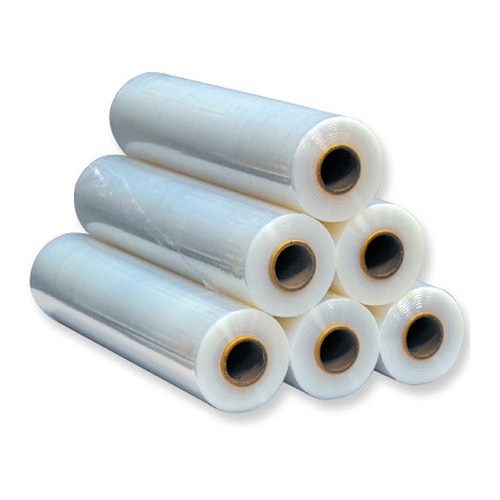 | STRETCH FILM Greenline Industries is a leading manufacturer and supplier of high-quality stretch films in India. View product → |
Set acceptance, storage and replenishment rules for store stock
Approve each incoming lot against a retained sample from the trial load, not against roll price alone. For an LLDPE stretch film roll for retail stores in Vadodara, record the batch number, nominal gauge, width, net length and core specification on receipt.
Reject or quarantine rolls with crushed edges, loose cores, broken wrapping or missing traceability.
Use the same carton, bundle or trolley pattern in acceptance checks:
- Confirm the dispenser fits and the roll unwinds without sudden resistance.
- Count film breaks and corner punctures during repeated wrapping.
- Check load movement after backroom handling and the planned dispatch route.
- Record film consumed, operator time and roll changes per load.
Store rolls indoors on their edges, away from direct sunlight, heat, moisture and dust. Keep them in their original wrapping until use, rotate older batches first, and let stock acclimatise to the store environment before wrapping. Heat and ultraviolet exposure can alter cling, unwind behaviour and strength.
Set a reorder point from average daily consumption, supplier lead time and safety stock, then review it after a new batch or wrapping method. Compare stretch film options in Vadodara by cost per wrapped carton or load, including rejected loads and breakage.
For food, cosmetics or other regulated goods, approve only film with a declaration of compliance, migration information and additive disclosure; secondary-carton suitability does not prove direct-contact suitability.
Frequently asked questions
How do I choose an LLDPE stretch film roll for a retail store?
Choose the application method first: hand wrapping, a pre-stretch dispenser or a powered machine. Then match film width, micron and construction to the load and wrapping speed.
Which stretch film specifications should Vadodara retail stores compare?
Compare micron, roll width, roll length, core size, net film weight, cling, puncture resistance and whether the film is standard, pre-stretched or machine-grade.
How can I calculate stretch film consumption?
Record the load perimeter, number of wraps and loads wrapped. Multiply perimeter by wrap count and add the film used for overlap, tails and handling losses; compare the result with the roll length.
What should you check before accepting a regular film supply?
Test a sample for consistent thickness, clean unwinding, cling, tear resistance, puncture resistance and load stability. Record roll dimensions, batch details and defects before approving replenishment.
Keywords