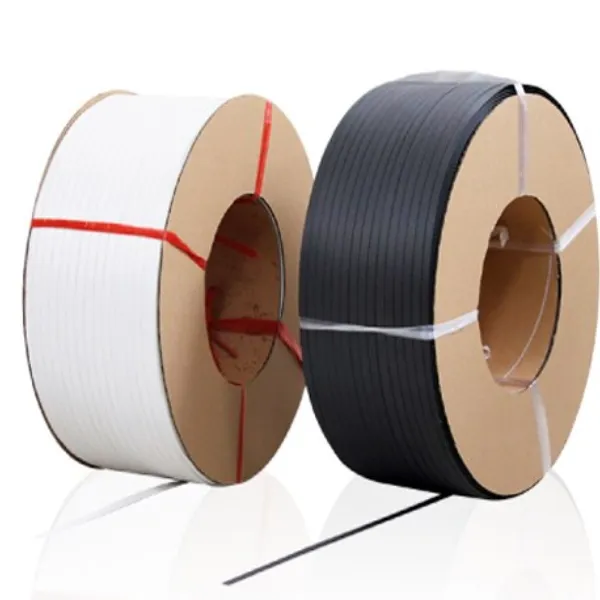
Strapping provides reinforcement and load containment where cartons, bundles or palletised products need additional security. Two materials commonly considered are polypropylene and PET. Businesses searching for a PP Box Strapping Roll Supplier in Vadodara often want to know whether PP is adequate for their packaging or whether PET would be more suitable.
The answer depends primarily on the load, handling environment and required tension.
Understanding PP Strapping
Polypropylene strapping is widely used for light to moderate packaging applications.
Common applications can include:
- Carton reinforcement
- Bundling printed materials
- Securing lightweight packages
- General warehouse packaging
- Grouping products for internal handling
- Routine dispatch requirements
Its practicality and comparatively lightweight construction make PP strapping useful where extreme load retention is not required.
When PET May Be Considered
PET strapping is typically evaluated for heavier or more demanding loads where greater retained tension and strength are important.
Industrial products, heavier pallet loads and goods that travel through demanding distribution environments may require a different strapping specification from lightweight cartons.
This does not mean PET should automatically replace PP. Using a heavier-duty material for every package can add unnecessary cost.
The correct decision comes from matching material performance to the actual load.
Compare the Application Rather Than the Material Name
Procurement managers can start with several questions:
- What is being strapped?
- How heavy is the package or pallet?
- Is the load rigid or compressible?
- How will it be transported?
- Is strapping applied manually or by machine?
- What tension does the application require?
- How frequently is the material consumed?
These questions help narrow the specification before price comparisons begin.
Equipment Compatibility Is Essential
Strapping tools and machines are designed around particular material sizes and specifications.
Changing strap width or thickness without checking compatibility can create feeding, sealing or tensioning issues.
Before purchasing a large quantity, confirm that the proposed PP strapping works with the equipment already used at the facility. If hand tools are used, evaluate the corresponding tensioning and sealing method as well.
Greenline Industries supplies packaging materials for manufacturing, warehousing and distribution requirements in Vadodara. Buyers comparing strapping products can obtain more relevant options by clearly communicating the application and existing equipment.
Calculate Cost Per Packed Unit
A roll price alone provides limited information.
Consider how many cartons or pallets can be securely strapped from each roll and how much labour is required. Also consider breakage, rejected seals and material waste.
For instance, inexpensive strapping that frequently splits or requires additional bands may create a higher effective cost than a more consistent product.
A trial using representative loads can help calculate a realistic cost per packed unit.
Avoid Common Strapping Mistakes
Several problems occur when strapping is selected or applied incorrectly:
- Excessive tension damages cartons.
- Insufficient tension allows movement.
- Incorrect strap dimensions cause equipment problems.
- Sharp product edges damage the strap.
- Too many straps increase consumption without meaningful benefit.
- Poor load arrangement places unnecessary stress on individual bands.
Strapping should be part of a coordinated packaging system that may also include cartons, edge protection, stretch film and cushioning.
For industrial operations across Vadodara and Gujarat, PP strapping can be an efficient choice when used for appropriate loads. PET serves a different performance range. Rather than assuming one is universally better, buyers should compare load requirements, equipment compatibility, consumption and transport conditions. That application-based approach leads to better packaging decisions and more controlled operating costs.
Keywords